Shamisen and Odori: the music and dance of Kabuki
ポスター「歌舞伎の世界へ:三味線と踊り」
—CLIENT—
Tomoe Arts, Vancouver, CANADA.
—CREDITS—
Julien Butterlin
—ROLE—
Illustration and Graphic Design
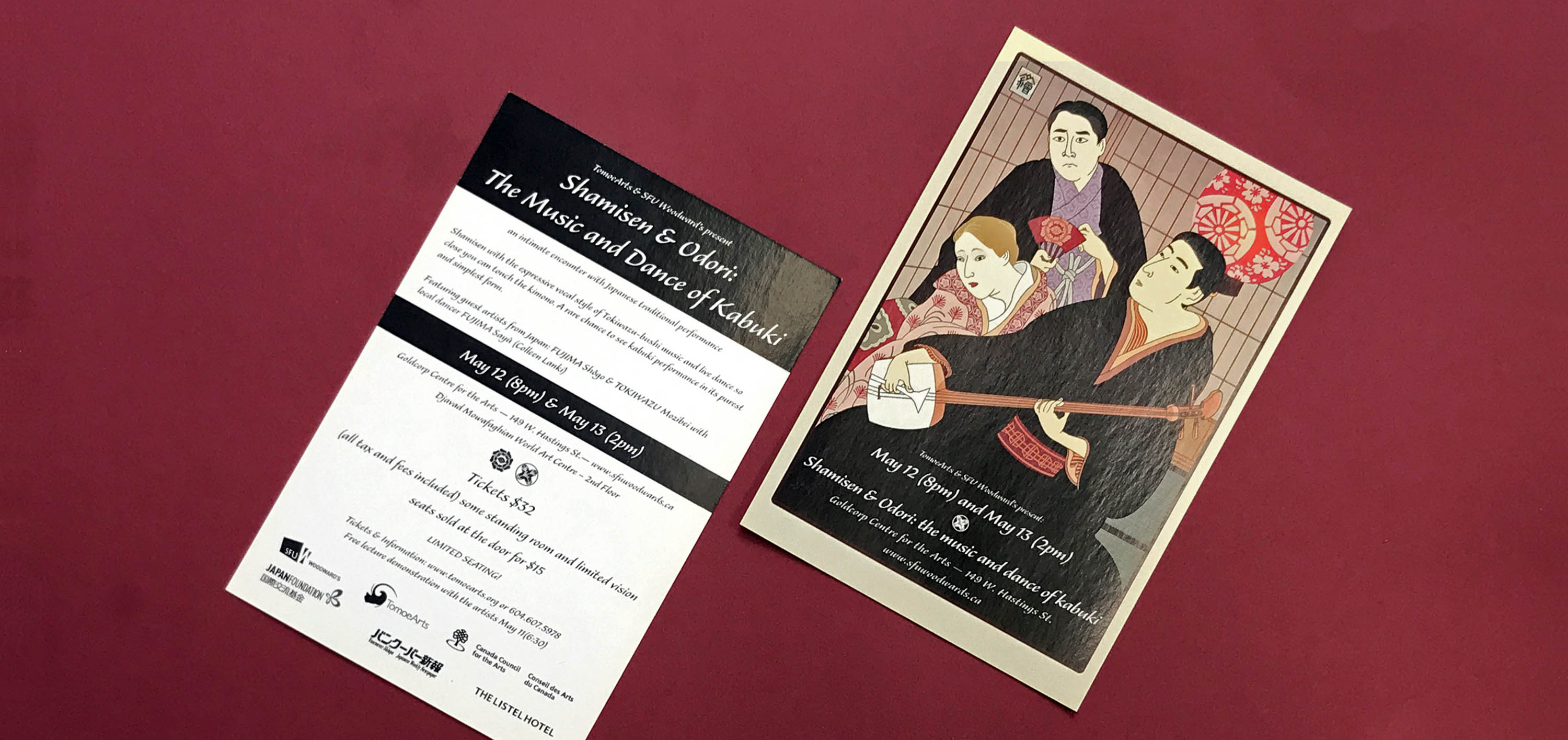
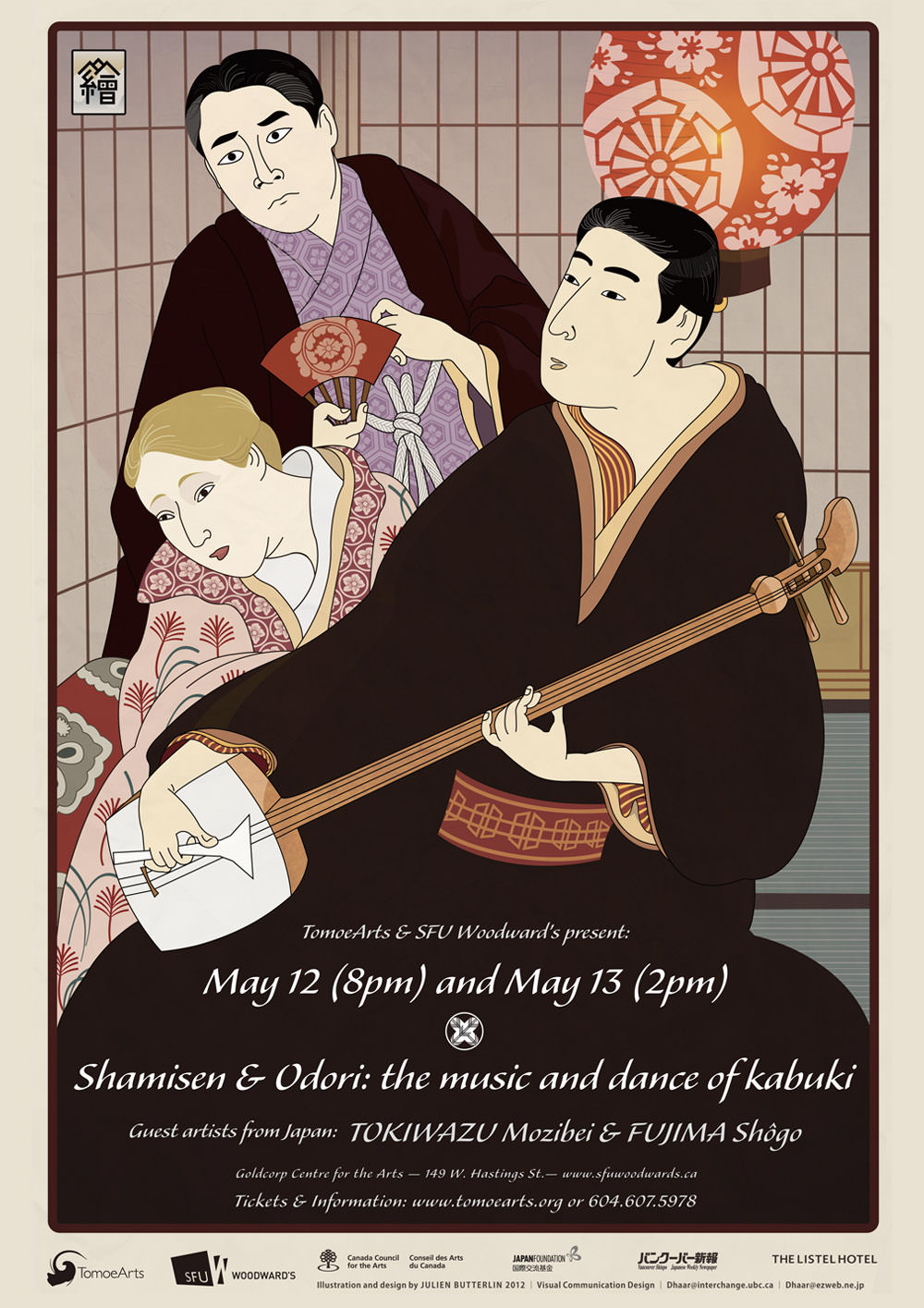
A3 Poster and postcard invitations for a Kabuki theater event, one of Japan's classical theatrical forms. Kabuki theatre is known for the stylization of its drama and for the elaborate costumes and make-up worn by the dancers. The illustration represents the two performers–one invited from Japan, and one from Vancouver–while they dance, accompanied by a Shamisen player– also a guest from Japan.
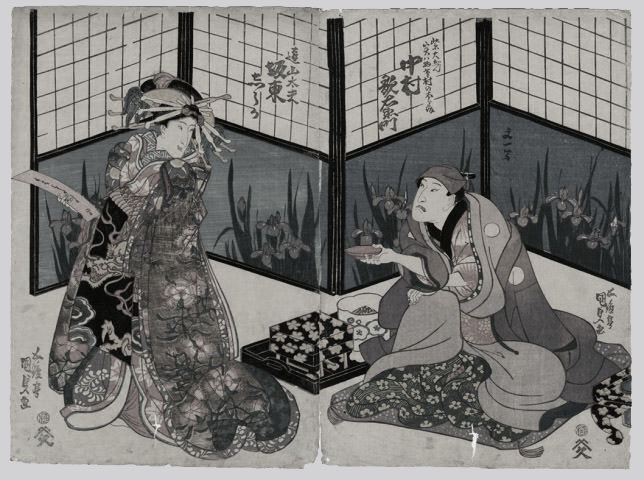
The style of the illustration is that of Edo-period (1603–1867) wood block prints, a very popular medium for communication at the time Kabuki was at the height of its popularity among townsfolk. Among the many prints produced during the late Edo-period, the so called “actor prints,” Yakusha-e (exemple bellow) which depicted scenes and actors from the Kabuki world were widely sold. They are often characterized by enough realistic detail that scholars have been able to identify the subjects of many of these prints–often down to the plays, roles and actors portrayed.
Therefore, during the conception stage of this poster, special attention was paid to ensuring that the dancers and players were accurately represented using photographic references of the troupe’s members. The other major goal in visual communication was to convey the dynamic of the troupe on stage. To do so, the image was articulated using strong diagonals (position and gaze of the actors, use of layered black color, rendering of the Shamisen and belt of the forefront player, perspective) as well as high contrast colors.